Revision endoprosthetics

Revision endoprosthetics is a highly specialised subspecialty of orthopaedics dealing with the exchange or correction of existing artificial joints. Even though modern implants often last a long time (approximately 20–25 years), they do not last forever. Over the years, wear particles can trigger inflammatory reactions. As a result, the prosthesis may lose stable fixation in the bone and become loose—affecting either individual components (e.g., cup or stem) or the entire system.

To prevent serious secondary bone damage, timely evaluation and—when indicated—revision surgery are essential at the first signs of instability. Prof. DDr. Faschingbauer places strong emphasis on early action to clarify whether bacteria are involved in the loosening (septic) or not (aseptic).

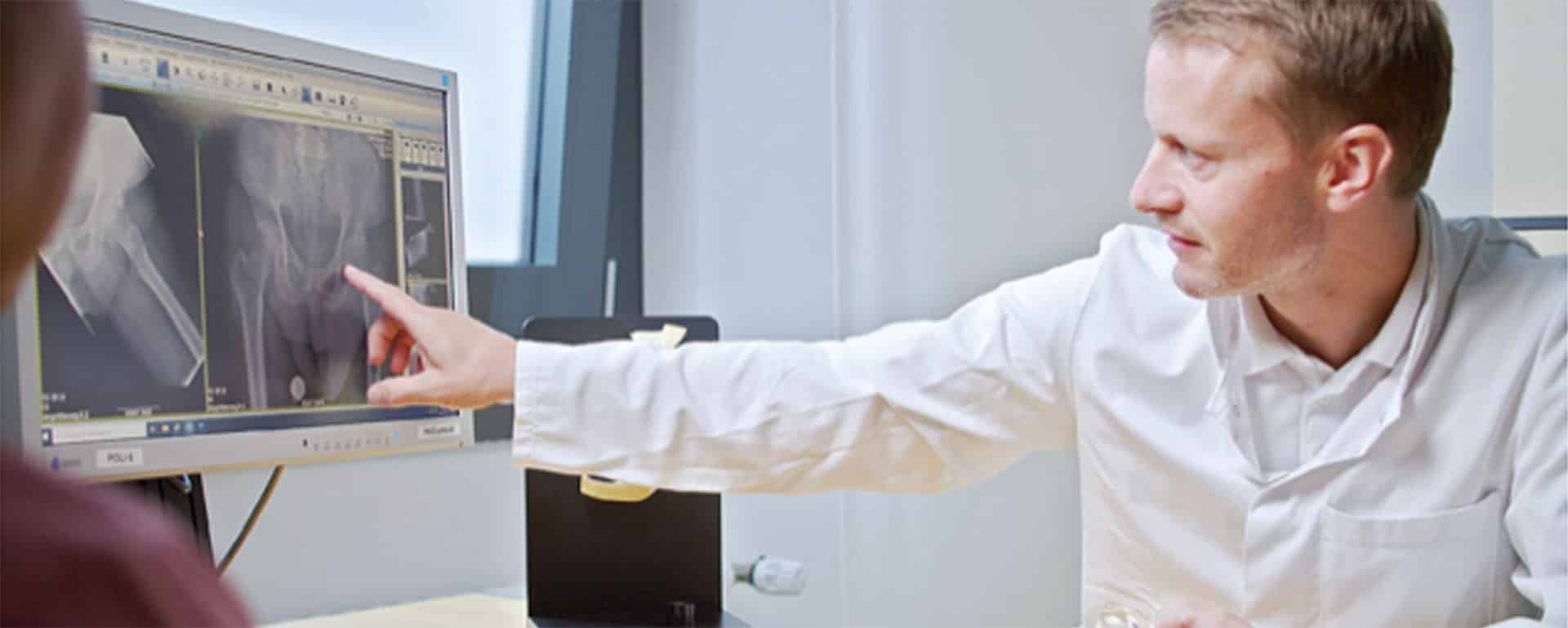
Portrait von Prof. DDr. Martin Faschingbauer zur Vorstellung auf der Website.

Quick facts on revision endoprosthetics

  • Services: Diagnostics of prosthesis failure (e.g., loosening), insert/liner exchange, septic and aseptic revision procedures

  • Treatment location: Wiener Privatklinik or Evangelisches Krankenhaus Wien

  • Surgery duration: depends on cause and complexity; typically longer than primary joint replacement

  • Hospital stay: usually several days, approx. 7–11 days

  • Recovery: longer than after primary implantation; structured aftercare is essential
When is revision surgery necessary?

Revision becomes necessary when an existing joint replacement loses function or causes symptoms that significantly impair everyday life. Unlike primary implantation, the goal is not to replace a natural joint but to correct or exchange an implant.

Typical indications include persistent pain, functional decline, instability, radiological signs of loosening, or the need to maintain long-term function after years of use. Because inflammation-related bone loss can compromise fixation, timely action is important.

Causes of revision surgery

The reasons are diverse and often develop over time. Clinically, we distinguish:

  • Aseptic loosening: wear particles and bone loss without bacterial involvement

  • Septic loosening: bacterial infection requiring prompt revision to prevent spread
    Additional causes:

  • Mechanical problems (malposition, instability)

  • Material wear of implant components

  • Dislocation (recurrent “popping out”)

  • Bone loss / poor bone quality

  • Prior surgeries affecting joint mechanics

Typical symptoms suggesting the need for implant exchange

  • New or increasing load-related or resting pain

  • Instability / “wobbling” sensation

  • Reduced range of motion and function in everyday life

  • Swelling and warmth (especially if infection is suspected)

  • Perceived leg shortening or deformity

  • Clicking or grinding sensations during movement

Implant exchange in bacterial infection (septic complication)

If loosening or dysfunction is due to bacterial infection, treatment must address both the implant and the infection. This is among the most demanding tasks in revision endoprosthetics.

Usually performed as a two-stage procedure:

  1. First stage: complete removal of infected components and insertion of an antibiotic-loaded spacer to maintain mobility and deliver local antibiotics; followed by targeted antibiotic therapy for several weeks

  2. Second stage: once infection eradication is confirmed, implantation of the definitive revision prosthesis

Hüft-Endoprothetik

Standard (single-stage) revision in aseptic/mechanical cases

If no bacteria are detected, symptoms are often due to mechanical issues or aseptic loosening. Revision can then often be performed in a single procedure. Only the loosened or damaged components are exchanged where possible, aiming to preserve healthy bone stock and restore stable function.

Typical steps:

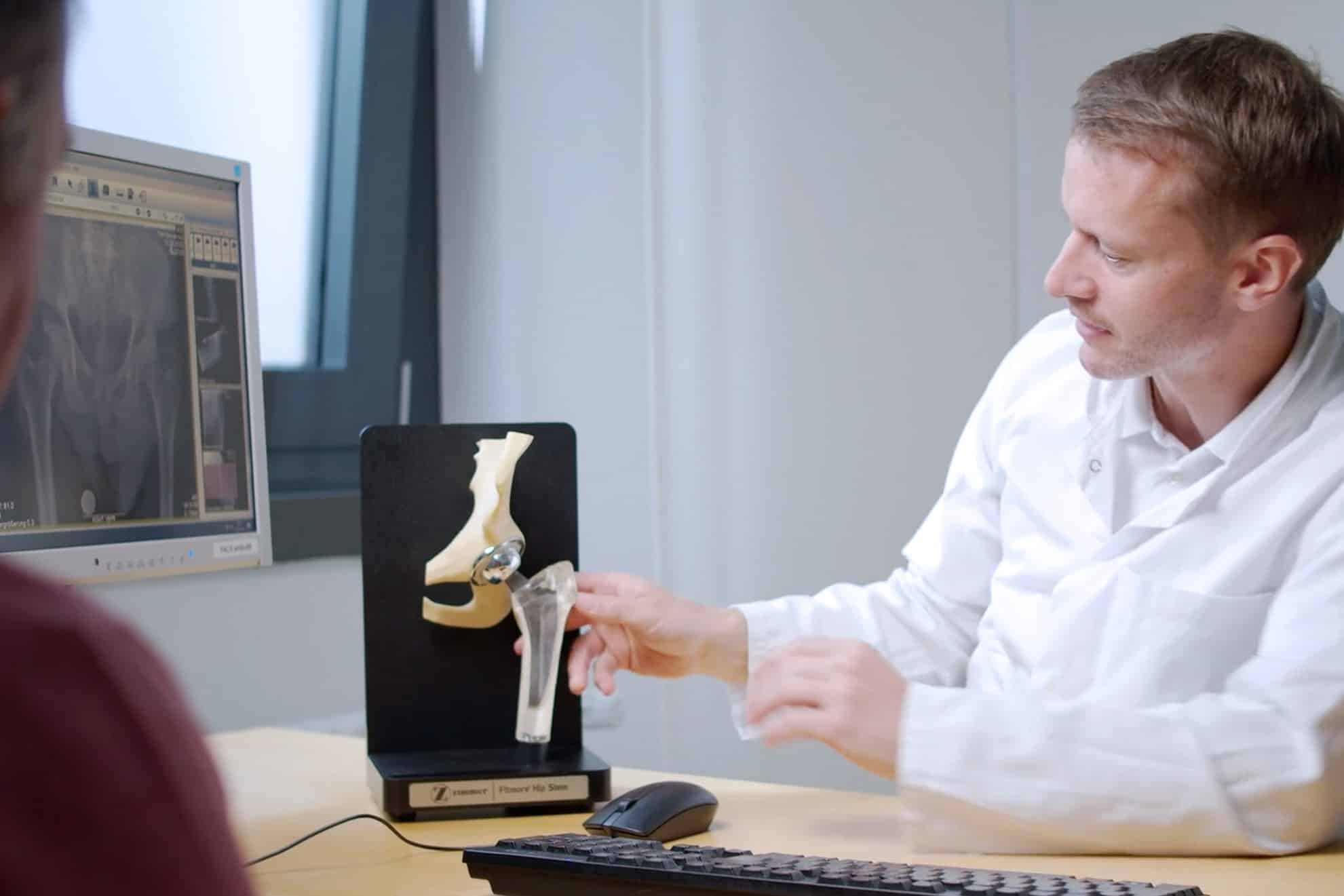
  • Pre-operative planning: digital analysis of loosening and selection of suitable revision implant

  • Removal: careful extraction while preserving healthy bone

  • Implantation: deeper fixation and/or specialised augments for stable anchorage

  • Aftercare: intensive mobilisation to activate function as early as safely possible

Häufige Fragen zur Revision Endoprosthetics

The exchange or correction of an existing joint replacement when it no longer functions adequately.
In principle, multiple revisions are possible if sufficient bone stock remains.
Partial weight-bearing is often possible immediately; progression to full weight-bearing is defined individually.
Yes—planning, technique and experience requirements are typically higher.
Longer healing, delayed weight-bearing and possible recurrence of infection; careful diagnostics, structured treatment and close follow-up are crucial.
[contact-form-7 id="e6d5a4a" title="Kontakt"]

Close form