As a hip specialist in Vienna, Prof. DDr. Martin Faschingbauer offers holistic evaluation and individual treatment. Not every change on an X-ray means immediate hip surgery. Once the exact cause of hip pain has been identified, a suitable conservative or surgical treatment can be recommended and precisely planned.
Hip complaints Orthopaedist for the hip
A hip orthopaedist is needed when hip pain, reduced mobility or functional problems increasingly affect everyday life. Hip complaints have many possible causes—from temporary overload to structural joint changes requiring targeted orthopaedic evaluation.
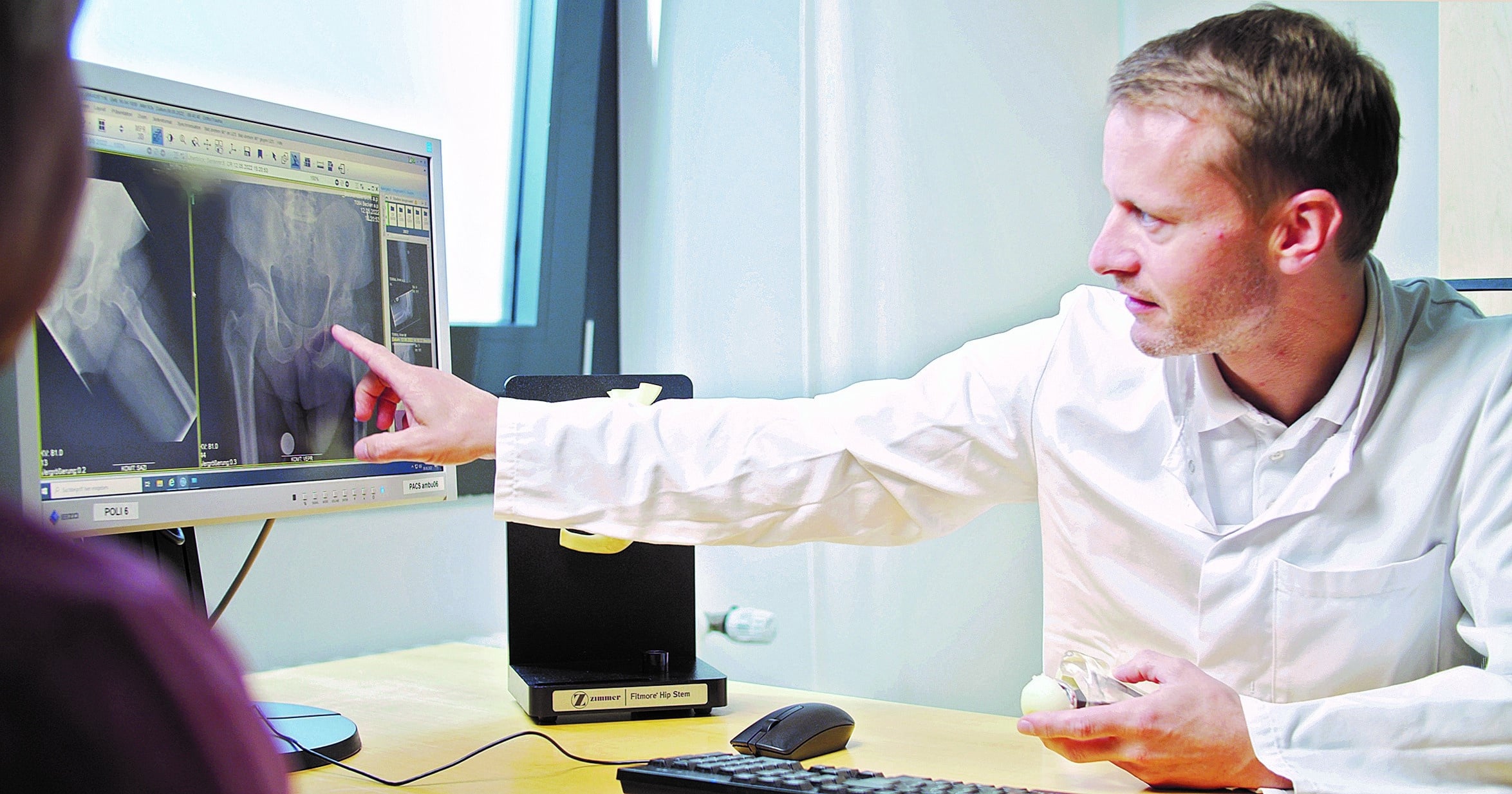
Quick facts
Focus: evaluation and treatment of hip complaints
Treatment location: private practice at Wiener Privatklinik outpatient centre
Treatment options: conservative or surgical
Specialisation: minimally invasive procedures and navigated joint replacement
Recovery: depends on cause and chosen therapy
Common hip conditions & possible causes
Hip osteoarthritis (coxarthrosis)
Femoroacetabular impingement (FAI)
Bursitis
Avascular necrosis of the femoral head
Labral tear
Mechanical causes (malalignment, leg-length discrepancy, muscular imbalance)
Inflammatory diseases (e.g., rheumatoid arthritis)
Post-traumatic changes after falls, fractures or previous procedures
Typical symptoms
Groin, buttock or lateral thigh pain
Load-related pain when walking/standing/stairs
Stiffness and pain when standing up, improving with movement
Reduced flexion/rotation
Radiating pain to thigh or knee
Limping or gait insecurity
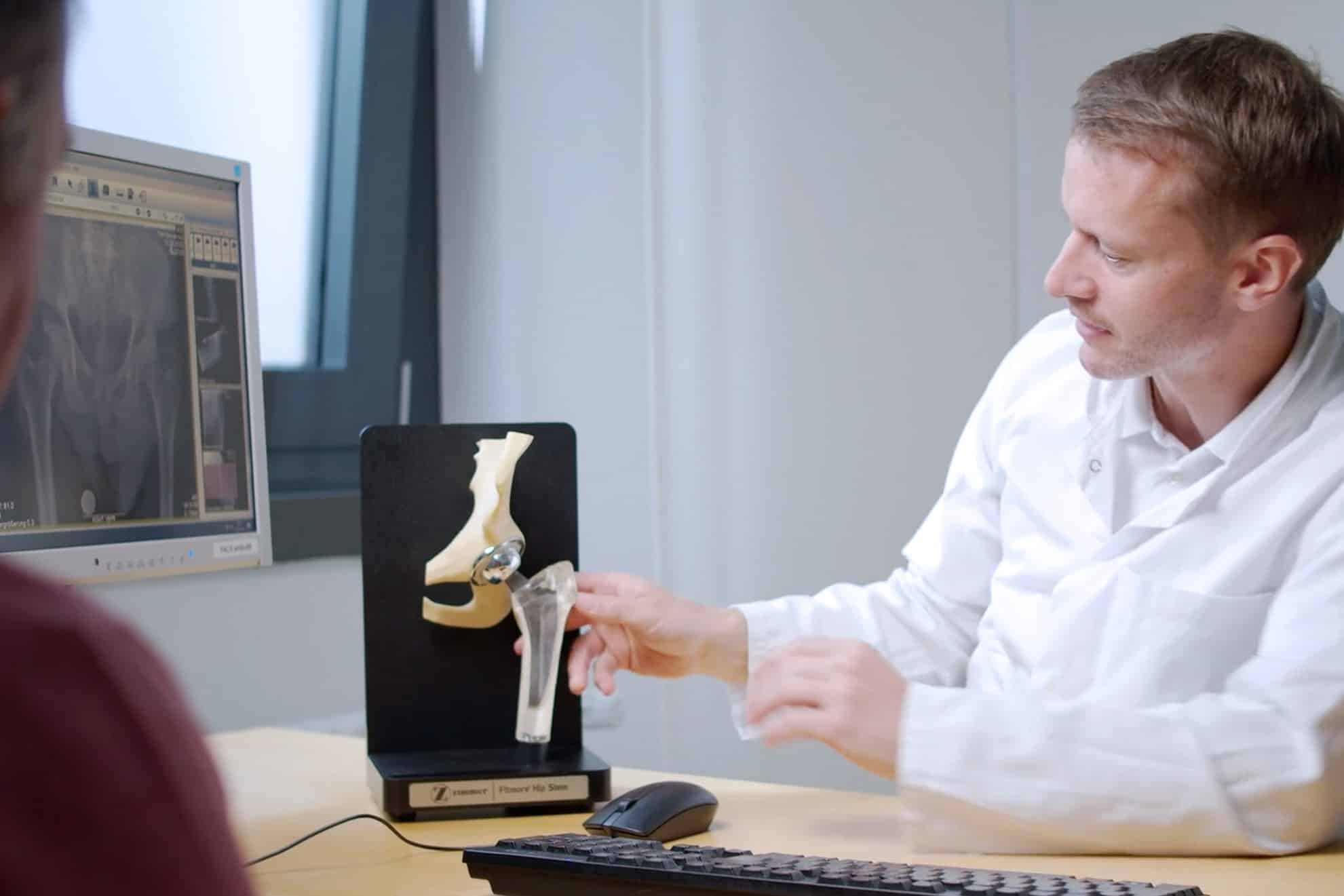
When you should seek medical evaluation
If hip pain persists for several weeks or does not improve despite rest and simple measures, evaluation is recommended—especially if daily activities are limited, walking distance decreases, or pain occurs at night.
Early assessment can prevent minor damage from becoming major problems and helps guide the course effectively.
Conservative treatment options
Depending on the findings: physiotherapy, targeted strengthening, manual therapy, medication for pain/inflammation, and injections/infiltrations (e.g., corticosteroids for inflammation control, hyaluronic acid to improve lubrication, PRP/autologous blood therapy to support regeneration).
Surgical treatment of the hip
If the cause is clearly identified and conservative measures are insufficient, surgery may be considered. Further details on operative procedures and joint replacement are provided on the respective focus pages.
FAQ – Hip complaints
Most common cause: degenerative change such as hip osteoarthritis
Hip pain can originate from the spine or muscles
Many cases can be treated conservatively
Surgery can be necessary in younger patients (e.g., impingement, dysplasia) with joint-preserving goals
Recovery time varies; after joint replacement often 6–12 weeks for everyday fitness