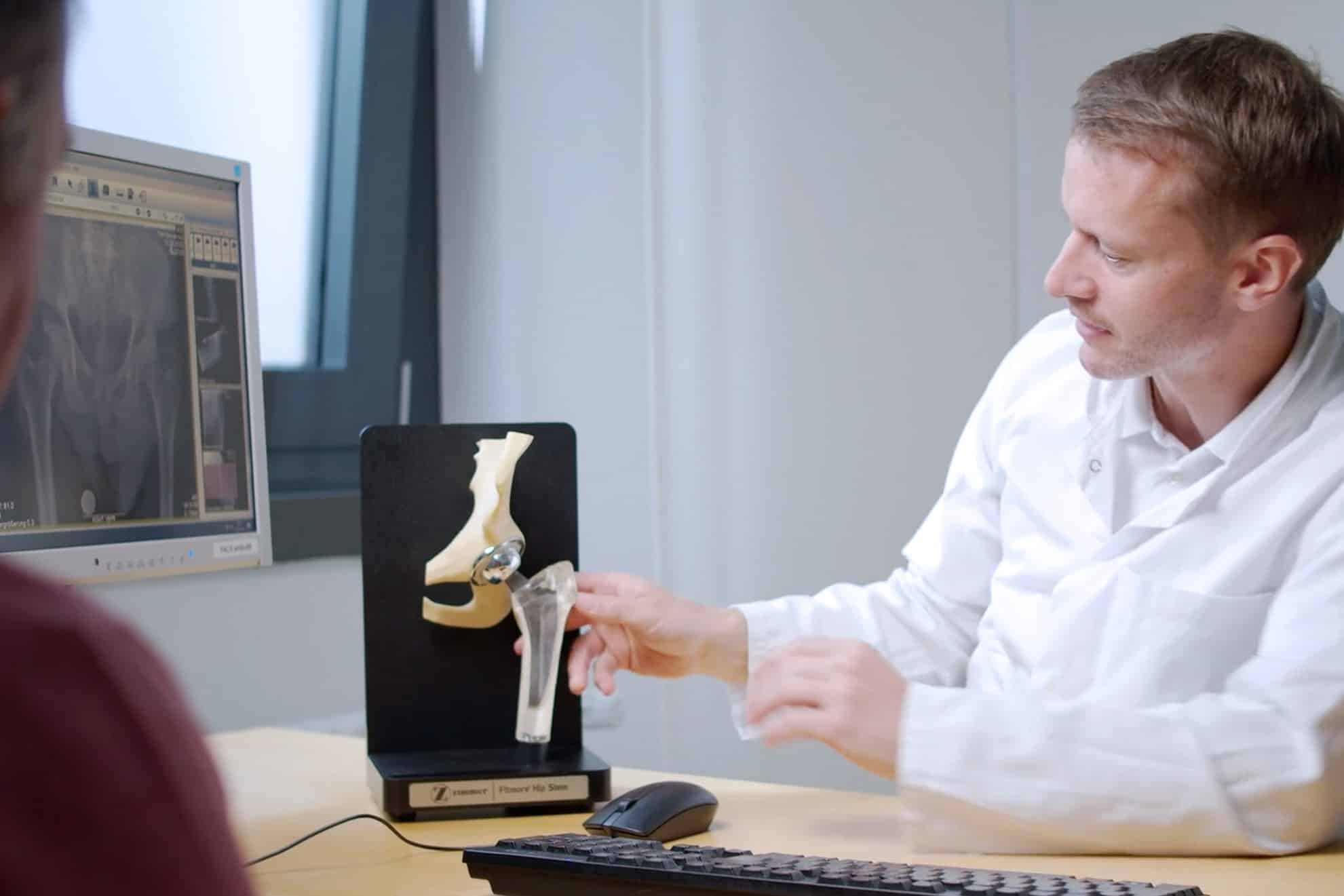
Hip endoprosthetics

Hip endoprosthetics is indicated when chronic pain, limited mobility or progressive functional loss of the hip joint increasingly affects everyday life and conservative treatments no longer provide adequate relief. The aim of an artificial hip joint is to reduce pain and restore mobility and quality of life in the long term.

In Prof. DDr. Faschingbauer’s practice, careful and individual indication is the top priority. Every decision for surgical hip replacement is based on an individual evaluation of symptoms, underlying causes and the patient’s personal requirements. As a specialist in hip endoprosthetics in Vienna, Prof. DDr. Faschingbauer combines extensive surgical experience with precise diagnostics to determine the optimal timing and the right implant type for sustainable hip joint replacement.

Hüft-Endoprothetik

Quick facts on hip endoprosthetics

  • Services: Comprehensive diagnostics, total hip replacement within hip endoprosthetics, structured aftercare

  • Treatment location: Wiener Privatklinik or Evangelisches Krankenhaus Wien

  • Surgery duration: usually 60–90 minutes, depending on the individual situation

  • Hospital stay: typically 3–7 days

  • Recovery: early mobilisation often from day 1; completion of the intensive healing phase after about 3 months
When hip endoprosthetics is indicated

Typical symptoms An artificial hip joint is generally considered when joint wear or other structural changes have progressed to persistent pain and lasting functional limitation. This often starts gradually.

Typical symptoms include:

  • Groin pain often radiating into the thigh or knee

  • Morning stiffness and start-up pain

  • Limited mobility (e.g., putting on socks, getting into a car)

  • Limping due to protective posture

  • Pain at rest, often at night and affecting sleep

Possible causes

Most commonly, hip replacement becomes appropriate due to a combination of factors over years, leading to structural joint damage, severe pain and reduced mobility.

Common causes include:

  • Degenerative changes (osteoarthritis): progressive cartilage loss until “bone on bone” friction occurs

  • Mechanical causes & malalignment: hip dysplasia, deformities, leg-length discrepancy, uneven loading

  • Post-traumatic changes: consequences of fractures, injuries or previous operations

  • Inflammatory diseases: e.g., rheumatoid arthritis and other chronic inflammatory joint disorders

  • Impaired blood supply of the femoral head: e.g., avascular necrosis

Endoprosthetics

Hip Joint

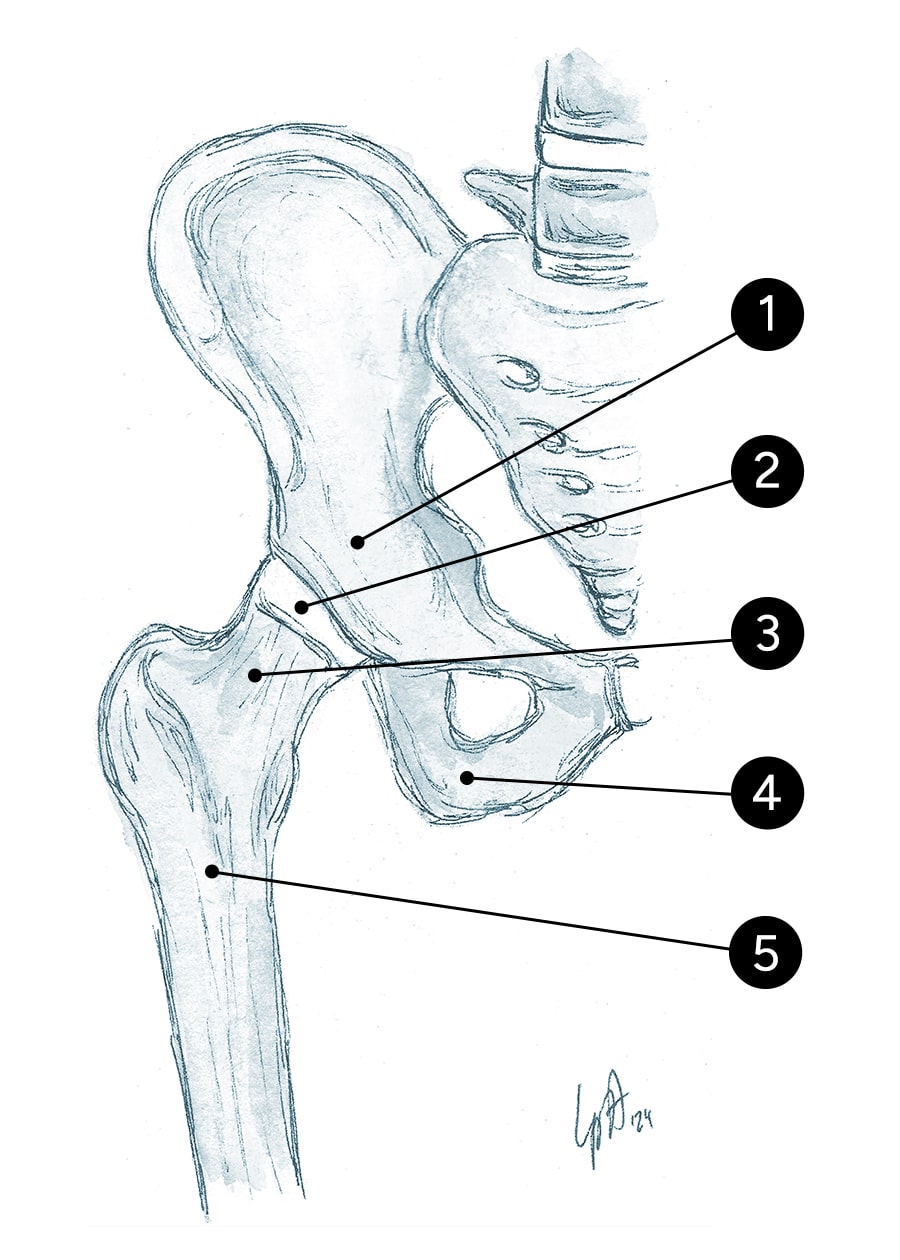
The hip joint is a ball-and-socket joint and allows movement in many directions.
It is involved in normal walking, running, bending, turning, and moving the legs toward and away from the body.

The Hip Joint

  • 1. Hip socket (Acetabulum)
  • 2. Femoral head (ball-shaped joint head)
  • 3. Femoral neck
  • 4. Pelvic bone
  • 5. Thigh bone (Femur)
Schematic illustration of the hip joint with labels

When you should seek medical evaluation

Specialist evaluation is advisable if hip pain and/or limitation persists over time or does not improve sufficiently despite conservative measures—especially when daily life is restricted, walking distance decreases or pain occurs at rest and at night.

The goal is to realistically assess the extent of joint damage and define the optimal timing for potential hip replacement. Before surgery, all appropriate conservative options are typically exhausted, such as physiotherapy, medication and joint-preserving therapies.

Surgical treatment & process

If cartilage damage has progressed to the point where conservative therapy fails, hip surgery becomes medically appropriate. In most cases, a total hip arthroplasty (THA / hip TEP) is performed, replacing both the acetabular socket and femoral head. Partial replacement is usually reserved for specific emergency situations such as femoral neck fractures.

Hip endoprosthetics in Vienna follows a clear, structured pathway:

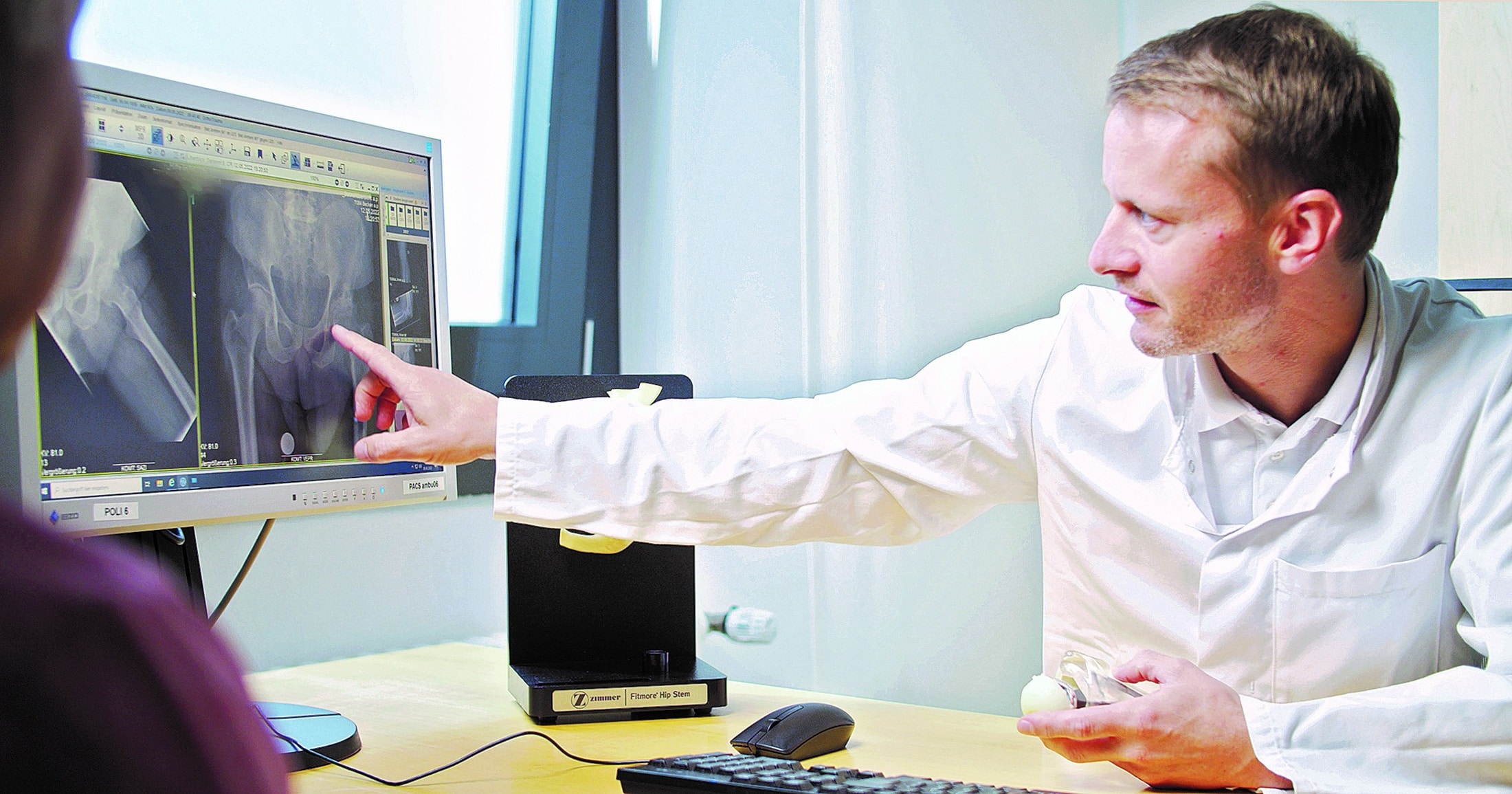
  • Pre-operative assessment: digital and precise planning using imaging (X-ray, possibly CT/MRI) to determine exact component size and positioning and to restore leg length and stability

  • Surgery: removal of the damaged femoral head, preparation of the socket, and precise fixation of the artificial hip joint (cup, liner/inlay, stem and head) to achieve stable anatomical reconstruction

  • Aftercare: structured rehabilitation with early mobilisation, physiotherapy and regular medical follow-up

Professionelles Portrait von Prof. DDr. Martin Faschingbauer im medizinischen Kontext

Prosthesis types in hip endoprosthetics

Although modern standard systems offer a wide range of sizes, the correct implant concept is decisive for long-term success. Depending on anatomy and bone quality, different models are used to ensure the best fit. Short-stem implants can preserve bone particularly well; proven standard stems provide excellent stability for many patients. In reduced bone quality, cemented stems may be preferred for secure fixation. This selection supports accurate reconstruction of joint geometry, soft-tissue preservation and early full weight-bearing where appropriate.

Häufige Fragen zur Artificial Hip Joint

Modern implants have a long service life; with normal loading, more than 90% last 20–25 years or longer.
With advanced anaesthesia and tissue-sparing techniques, post-operative pain is usually well controlled. Many patients find it significantly less burdensome than pre-operative osteoarthritis pain.
Light activities such as walking are usually possible early. Low-impact sports like swimming or cycling are often recommended after about 6–8 weeks; stop-and-go sports should be discussed individually.
Yes—combinations of metal, ceramic and highly cross-linked polyethylene are used. The bearing couple is selected based on age, weight and activity level.
The goal is a natural joint function that is barely noticeable in day-to-day life.
[contact-form-7 id="e6d5a4a" title="Kontakt"]

Close form